
High-Gloss Wheel Powder Coatings: Building a Reliable Finish from Primer to Clear Coat
Automotive Wheels Demand More Than an Attractive Color
A wheel is one of the most visually demanding coated components on a vehicle.
Its surface is exposed to sunlight, rain, road contaminants, temperature changes and repeated cleaning, while complex spokes and recessed areas make consistent powder application more difficult than on a flat test panel. At the same time, customers expect a premium appearance: deep black, bright silver, smooth white, metallic effects and high-gloss transparent finishes must remain visually consistent across mass production.
For wheel manufacturers, this means the powder coating cannot be evaluated only by color.
Flow and leveling, gloss, edge coverage, intercoat compatibility, curing conditions and final system performance all matter.
Rivers Powder Coatings develops wheel coating solutions from a complete coating-system perspective, helping manufacturers move from laboratory samples to stable production.
High-Gloss Black: Small Defects Become Highly Visible
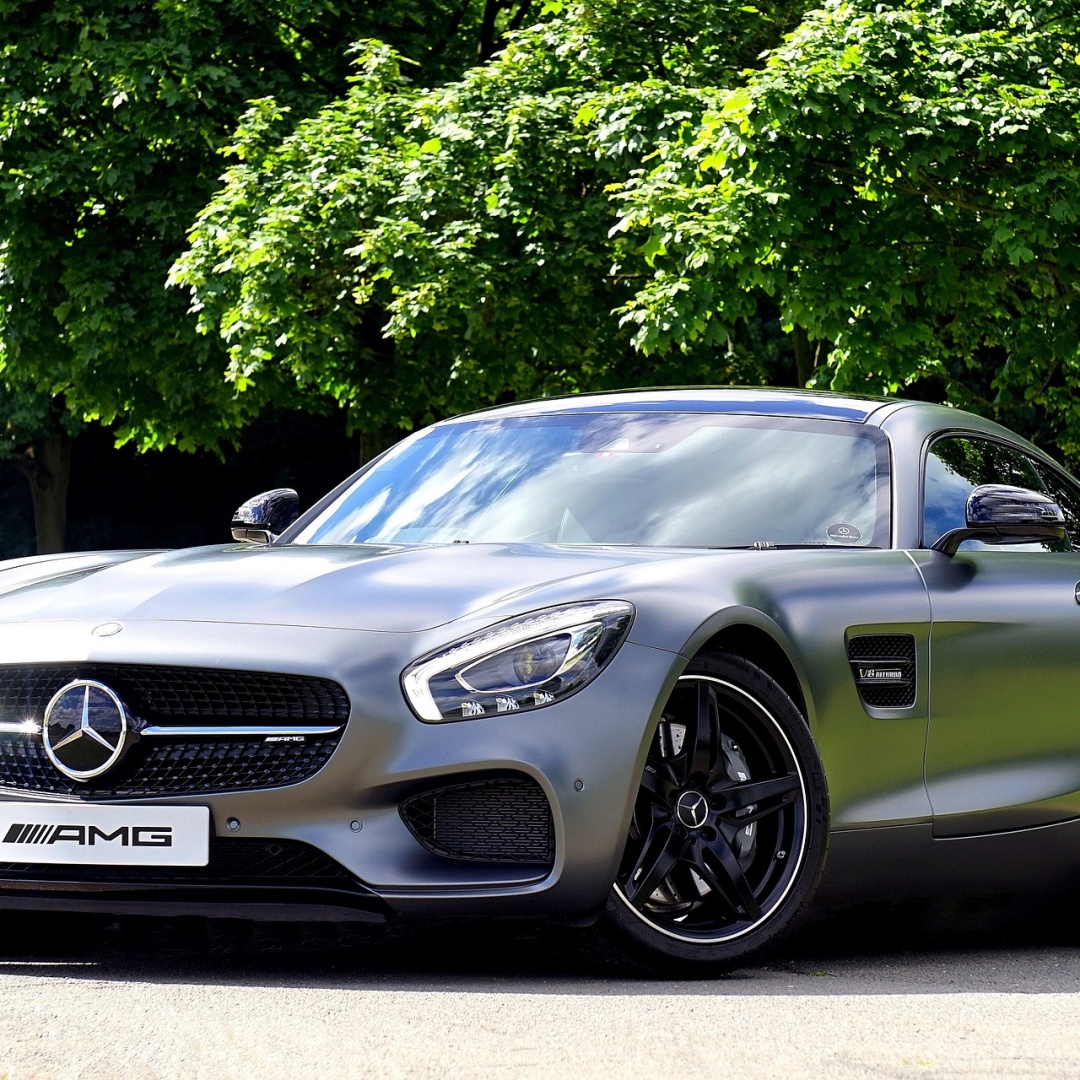
High-gloss black is one of the most demanding wheel finishes.
On a matt or textured surface, minor substrate or coating variations can sometimes be visually masked. A deep high-gloss black surface does the opposite: orange peel, pinholes, contamination, uneven flow and gloss variation become immediately noticeable.
Rivers has developed dedicated wheel-grade black base powders with gloss levels reaching approximately 95–97 GU under specified application and curing conditions.
Two approaches can be selected according to the customer's process and final coating structure: a standard high-gloss base system for applications where the subsequent coating structure provides the required protection, and an enhanced UV-resistant version where additional exterior durability is required.
The objective is not simply to maximize the gloss reading. A commercially successful wheel powder must combine high gloss with leveling, coverage and repeatability on actual wheel geometry.

A Multi-Layer System Creates More Finish Possibilities
Premium wheel finishes are frequently created through several coating layers rather than a single powder.
A representative Rivers wheel system can be structured as:
Pretreated Wheel → Base Powder → Metallic Effect Layer → Acrylic Clear Coat
For a classic silver wheel, for example, a black or suitable base layer can be followed by a RAL 9006-type silver metallic finish and then protected with a transparent clear coat.
The layers perform different functions.
The base powder establishes coverage and surface foundation. The metallic layer creates visual depth and the required aluminium-like appearance. The transparent topcoat contributes gloss, surface protection and the final visual character.
Rivers also develops acrylic transparent powder coatings for wheel applications where high clarity and a premium clear appearance are required.
Because the layers interact, however, they cannot be developed independently. Intercoat adhesion, partial curing, final curing and film thickness must all be considered as part of the complete system.
Metallic Wheels Require Controlled Application
Silver is not simply another RAL color.
Metallic pigments respond to electrostatic spraying conditions, part geometry, film thickness and reclaim practices. A laboratory panel may appear perfectly uniform while an actual multi-spoke wheel reveals differences between the face, spoke sides and recessed areas.
Rivers' metallic powder capability provides an important advantage in these applications.
The company currently operates around 30 large-scale metallic bonding lines, with actual metallic powder coating production of approximately 1,000 tons per month. Additional bonding capacity is being introduced as Rivers expands its manufacturing facilities.
Bonding technology helps improve the association between effect pigments and powder particles, supporting more stable pigment distribution during application and recovery compared with simple dry-blended metallic systems.
For wheel manufacturers, the practical objective is better repeatability—not simply a more dramatic laboratory sample.
Complex Geometry Makes Application Engineering Essential
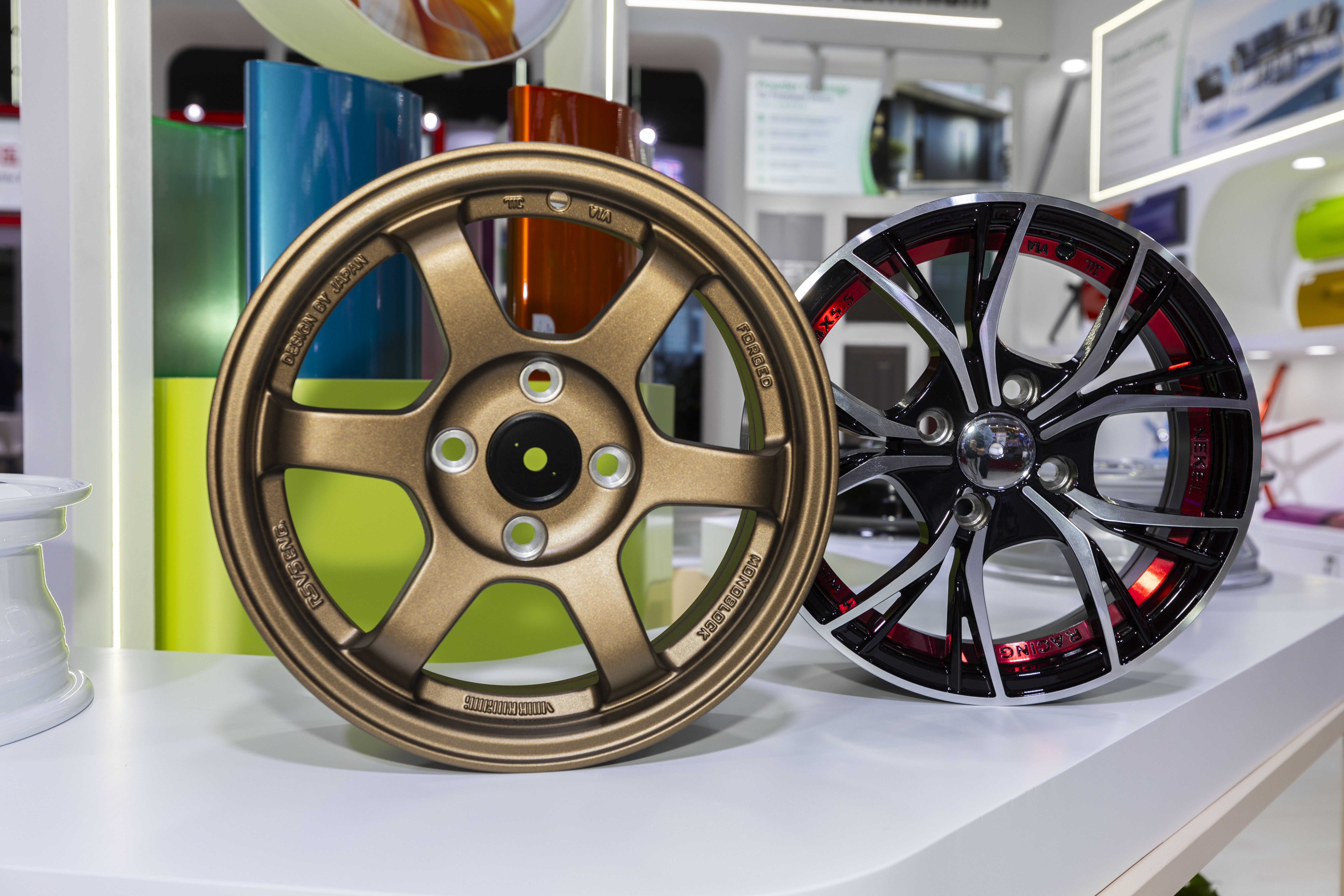
Wheel designs continue to become more complex.
Deep spokes, narrow channels, sharp transitions and recessed mounting areas create electrostatic challenges. Powder naturally deposits more easily on exposed surfaces, while Faraday-cage effects can make recessed areas more difficult to cover.
Simply increasing powder output is not an effective solution. It may create excessive film thickness on the wheel face while recessed areas remain insufficiently coated.
Gun voltage, current limitation, spraying distance, powder output, grounding and gun movement therefore need to be optimized together.
Rivers can use professional spraying and application-simulation equipment to evaluate powder behavior before commercial production. This helps customers identify whether a problem originates from the powder formulation, application settings, curing process or a combination of factors.
For overseas wheel manufacturers qualifying a new supplier, this application support can be as important as the powder itself.
Curing Control Directly Influences Appearance
A powder coating does not finish reacting when it leaves the spray booth.
The oven determines whether the formulation achieves its intended properties.
Wheel mass can create a significant difference between oven-air temperature and actual metal temperature. A curing specification therefore needs to be understood as substrate temperature plus time, rather than simply the number displayed on the oven controller.
Under-curing can affect adhesion, mechanical properties and intercoat performance. Excessive thermal exposure may also influence appearance or process efficiency.
For multi-layer wheel systems, curing becomes even more important because each layer must remain compatible with the next.
Rivers can provide product-specific TDS recommendations and work with customers to evaluate curing conditions during line trials.
From Laboratory Testing to Automotive Qualification
Automotive coatings are qualification-driven products.
Depending on the customer and wheel program, evaluation can involve adhesion, impact resistance, hardness, chemical resistance, humidity, corrosion, UV exposure and other OEM-specific requirements.
Rivers has wheel coating products supported by BYD OTS-related qualification experience and SGS testing documentation within its automotive project portfolio.
These references are valuable because they demonstrate experience with structured automotive evaluation. They should not, however, be interpreted as automatic approval for every wheel design or OEM program.
For a new project, Rivers recommends confirming the exact customer specification first and then selecting and validating the corresponding coating system.
Supporting Wheel Manufacturers Beyond China
Rivers' wheel coating development is increasingly international.
The company has worked on wheel-related opportunities and technical evaluations involving customers in markets including Australia, Russia, Türkiye and Canada, covering high-gloss black and white bases, metallic systems and clear-coat solutions.
For overseas customers, the evaluation process can begin with sample panels or powder samples before moving to actual wheel trials.
Rivers can support the process with TDS/SDS documentation, available test reports, color and effect matching, curing recommendations and technical troubleshooting.
This step-by-step qualification approach reduces the risk of changing suppliers while giving manufacturers an opportunity to evaluate both coating quality and technical support.
A Wheel Coating Should Be Designed as a System
The most attractive wheel finish is rarely created by one formulation alone.
Substrate preparation, base powder, metallic effect, clear coat, spraying parameters and curing conditions all influence the final result.
That is why Rivers approaches automotive wheel projects as a coating system rather than simply supplying a kilogram price for a black, silver or clear powder.
The target is straightforward:
premium appearance, repeatable application and reliable performance in mass production.
Call to Action
Developing or qualifying a new automotive wheel coating system? Contact Rivers Powder Coatings for high-gloss black and white bases, metallic effects, acrylic clear coats, customized samples, TDS/SDS, test documentation, quotations and coating-line technical support.

Rivers (Qianjiang) Group
Zhaoqing Qianjiang High-Tech Materials Technology Corporation
Guangdong Huajiang Powder Technology Co., Ltd.
Shandong Qianjiang Powder Technology Co., Ltd.
Guangdong Wesdon Rivers Powder Paints Scientifc Research Co., Ltd.
Zhaoqing Qianjiang Coating Co., Ltd.
Zhuhai Zhengdong Chemicals Co., Ltd.
Zhongshan Yonghan Industrial Additives Co., Ltd.
Guangdong Honglang Technology Co., Ltd.
WhatsApp:+86 150 1171 7323
Mail:global@riversqj.com
Address:
Guangdong Huajiang Powder Technology Co., Ltd.
No. 27 Jianshe Road, Dawang High tech Zone, Zhaoqing, Guangdong Province


