
Powder Coatings for Shipping Containers: Advanced Corrosion Protection for Demanding Marine Environments
1. Why Shipping Containers Need Reliable Corrosion Protection
Shipping containers operate in some of the most demanding environments encountered by industrial steel structures.
During their service life, containers may be exposed to coastal humidity, salt-laden air, temperature fluctuations, heavy rainfall, mechanical impacts and repeated handling.
A container can travel between tropical ports, dry inland logistics centers and highly corrosive coastal environments within a relatively short period.
These changing conditions place significant demands on its protective coating system.
For container manufacturers and fleet operators, coating performance directly influences maintenance requirements, exterior appearance and the long-term condition of steel components.
A suitable coating system must therefore provide more than attractive color.
It should deliver reliable adhesion, corrosion protection, mechanical durability and resistance to relevant environmental conditions.
As manufacturers continue to evaluate more efficient and environmentally responsible coating technologies, industrial powder coatings offer an alternative worth considering for suitable container components and production processes.
However, successful implementation requires careful attention to the complete coating system rather than simply replacing a liquid coating with powder.
2. Understanding the Main Corrosion Challenges
Salt-Laden Marine Environments
Containers frequently operate near ports and coastal facilities where airborne chlorides can accelerate steel corrosion.
When moisture and salts reach exposed steel, corrosion may develop beneath damaged or insufficiently protected coating areas.
This makes substrate preparation, coating adhesion and barrier performance particularly important.
Mechanical Damage During Handling
Containers experience repeated lifting, stacking, loading and transportation.
Corners, edges and other exposed areas may be subjected to abrasion or mechanical impact.
A coating system must provide suitable mechanical properties while maintaining adequate protection under the intended operating conditions.
Temperature and Weather Exposure
Container surfaces may experience significant temperature variations during transportation and storage.
Exterior coatings must also withstand sunlight, moisture and weathering.
For this reason, corrosion resistance and exterior weatherability should be considered together.
A coating with good corrosion resistance does not automatically provide sufficient ultraviolet resistance for long-term outdoor exposure.
3. Epoxy Primer and Weather-Resistant Topcoat Systems
For demanding steel protection applications, a two-layer powder coating system may provide a practical technical approach.
Epoxy Powder Primer
An epoxy powder primer can contribute to coating adhesion and corrosion protection when applied over properly prepared steel.
Its primary function is to help protect the substrate and provide a suitable foundation for the subsequent coating layer.
However, conventional epoxy powders generally have limitations in exterior UV resistance and should not automatically be selected as the exposed finish for long-term outdoor applications.
Weather-Resistant Polyester Topcoat
A suitable polyester powder topcoat can provide exterior color, gloss and weathering resistance.
When combined with an appropriate primer, it can form part of a protective coating system designed to balance corrosion performance and exterior appearance.
The selection of primer, topcoat, film thickness and curing conditions must be based on the intended application.
Not every polyester topcoat is suitable for severe marine exposure, and the performance of a complete system must be verified.
Why the Complete System Matters
A protective coating system is only as reliable as its weakest critical component.
Surface preparation, pretreatment, primer coverage, topcoat integrity and curing conditions all influence the final result.
For container applications, manufacturers must also evaluate coating coverage around welds, edges and complex structural areas.
These details can be as important as the coating formulation itself.
4. ISO 12944 and Corrosion Performance Evaluation
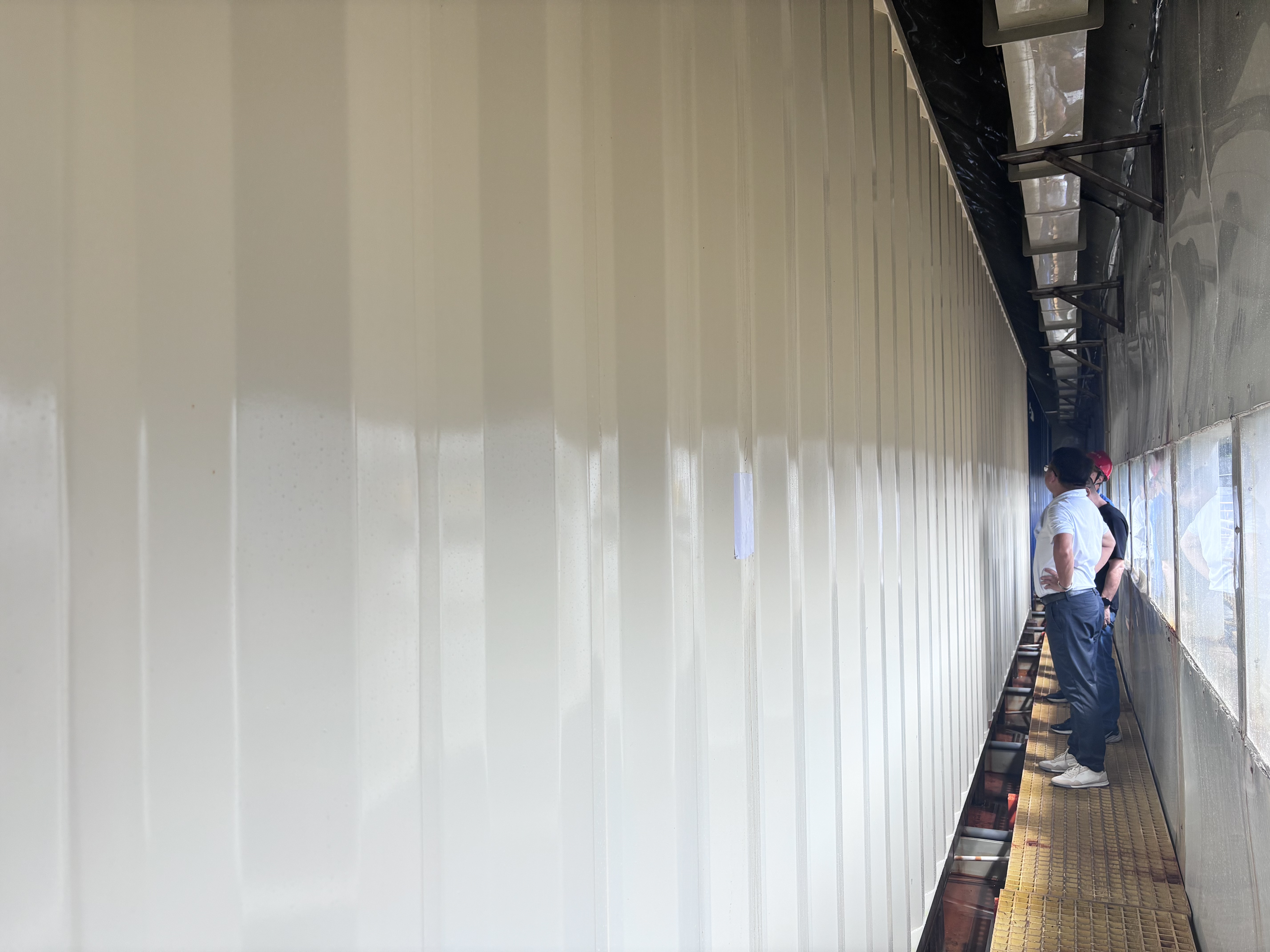
ISO 12944 provides an internationally recognized framework for evaluating protective coating systems for steel structures.
The standard identifies atmospheric corrosivity categories, including C3, C4 and C5, representing different environmental exposure conditions.
For container-related applications, these categories can provide useful references when discussing corrosion protection requirements.
However, an ISO 12944 environmental category is not a standalone product certification.
A coating system must be evaluated according to the relevant standard requirements, including substrate preparation, coating thickness, test methods and intended durability.
Accelerated corrosion testing may include salt spray, humidity exposure and cyclic corrosion methods, depending on the project specification.
Manufacturers should also consider mechanical performance, adhesion and actual application conditions.
Laboratory results provide important technical evidence, but they should be interpreted alongside production trials and real operating requirements.
5. Manufacturing Considerations for Container Powder Coating
Container manufacturing involves large steel structures and demanding production schedules.
Powder coating adoption therefore requires evaluation of both coating performance and production feasibility.
Important considerations include the available application equipment, component dimensions, oven capacity, metal temperature and curing time.
For large assembled structures, heating uniformity and access to complex areas may present additional challenges.
Manufacturers must also consider handling damage, repair procedures and the compatibility of the coating process with their production sequence.
These factors determine whether a powder coating system is commercially practical for a particular container manufacturing operation.
For overseas buyers, selecting an experienced supplier means discussing these production conditions early rather than evaluating coating performance only through laboratory samples.
6. Rivers: Industrial Powder Coating Experience in Container Applications
Founded in 1996, Rivers Powder Coatings has developed industrial surface-finishing solutions for steel structures, manufacturing equipment, shipping containers and other demanding applications.
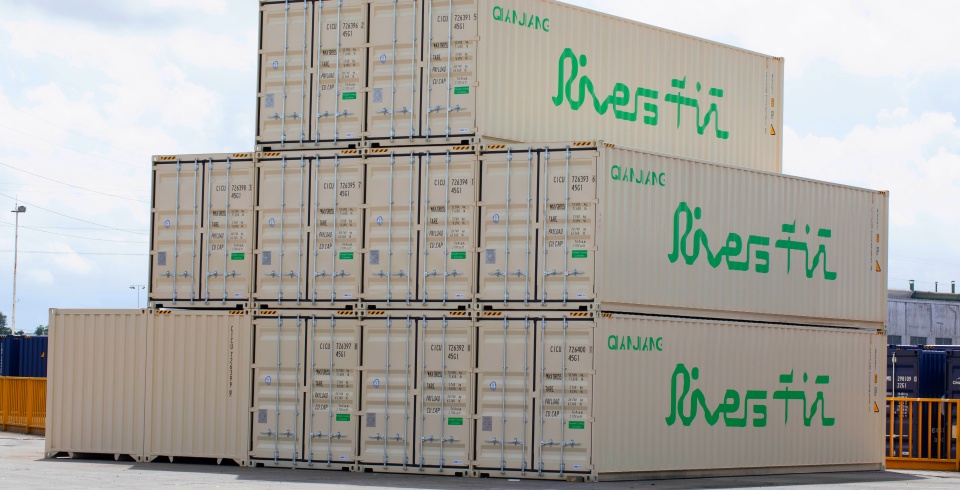
Container coating is one of the industrial application areas in which Rivers has accumulated practical project experience.
Rivers has supplied powder coating solutions for container-related applications, providing a foundation for understanding the balance between corrosion protection, mechanical performance and industrial production requirements.
This experience is particularly relevant to manufacturers evaluating alternatives to conventional liquid coating processes.
Instead of focusing only on the appearance of a finished sample, Rivers considers the relationship between the coating formulation, steel substrate and actual production conditions.
Steel Corrosion Protection Systems
Rivers has experience developing protective powder coating systems for steel substrates, including epoxy primer and weather-resistant topcoat combinations.
These systems can be evaluated for projects involving ISO 12944 C3, C4 and C5-related corrosion-protection requirements, subject to the applicable system design and verification.
For container manufacturers, this provides a technical starting point for selecting coatings according to environmental exposure and performance expectations.
The final coating structure must still be confirmed through project-specific testing and production validation.
7. KTA-Tested Container Coating Experience
One important aspect of Rivers' container coating experience is its involvement with coating systems evaluated through KTA testing.
KTA testing provides independent technical evidence relevant to the performance assessment of the specific coating system tested.
For overseas manufacturers, this type of testing can support a more structured evaluation of corrosion protection and other specified performance requirements.
However, the test results must be interpreted according to the actual report, test conditions and product identification.
A KTA-tested system should not be presented as universal certification for every Rivers powder coating.
Similarly, KTA testing does not automatically establish IICL certification or approval.
The practical value lies in having product-specific technical evidence that can be reviewed alongside the customer's own requirements.
For industrial buyers, documented testing can help reduce uncertainty during initial supplier evaluation.

8. What Rivers Brings to Container Manufacturers
For container manufacturers and industrial coating distributors, Rivers offers several relevant advantages.
Experience with Actual Container Applications
Rivers' container-related application experience provides a practical foundation for discussing the requirements of steel protection in demanding logistics environments.
This allows technical conversations to move beyond general powder coating properties toward actual manufacturing and operating conditions.
Protective Coating System Development
Rivers can evaluate epoxy primer and suitable weather-resistant topcoat combinations according to the customer's substrate, pretreatment process and target performance.
This system-oriented approach helps manufacturers compare coating options more effectively.
Customized Product Development
Rivers operates 100 dedicated sample-development lines, supporting customized colors, surface finishes and product-development requirements.
For container manufacturers, this capability can support the development of specific colors and coating options before commercial production trials.
International Technical Documentation
Rivers can provide English Technical Data Sheets, Safety Data Sheets and available product-specific test information.
These documents support communication between overseas purchasing, engineering and quality teams.
They also help distributors present coating solutions with clearer technical specifications.
Together, these capabilities create a practical route from initial technical discussion to sample development, testing, production trials and commercial supply.
9. From Coating Supplier to Long-Term Industrial Partner
For container manufacturers, a successful coating supplier relationship should extend beyond the initial purchase order.
Long-term cooperation requires consistent product quality, clear technical communication and the ability to respond to changing production requirements.
Rivers combines industrial coating development experience with container-related application knowledge and international technical support.
This approach helps customers evaluate protective coating systems with greater confidence and establish a clearer path toward repeat production.
The objective is straightforward:
To help manufacturers achieve reliable steel protection through coating systems matched to their actual production processes and operating environments.
Conclusion
Shipping containers require coating systems capable of addressing corrosion, weather exposure and mechanical demands.
A successful solution depends on more than the coating material itself. Surface preparation, system design, application conditions and appropriate testing all contribute to long-term performance.
With its experience in industrial steel protection, container applications and KTA-tested coating systems, Rivers supports manufacturers seeking technically appropriate powder coating solutions.
Reliable protection begins with the right coating system—and a supplier that understands the application.
Call to Action
Looking for a powder coating solution for shipping containers or industrial steel structures?
Contact Rivers with your substrate, coating process, environmental conditions and required performance standards.
Our team can support coating-system selection, customized sampling, technical evaluation and available English documentation.
Rivers Powder Coatings — Reliable Protection for Demanding Industrial Applications.

Rivers (Qianjiang) Group
Zhaoqing Qianjiang High-Tech Materials Technology Corporation
Guangdong Huajiang Powder Technology Co., Ltd.
Shandong Qianjiang Powder Technology Co., Ltd.
Guangdong Wesdon Rivers Powder Paints Scientifc Research Co., Ltd.
Zhaoqing Qianjiang Coating Co., Ltd.
Zhuhai Zhengdong Chemicals Co., Ltd.
Zhongshan Yonghan Industrial Additives Co., Ltd.
Guangdong Honglang Technology Co., Ltd.
WhatsApp:+86 150 1171 7323
Mail:global@riversqj.com
Address:
Guangdong Huajiang Powder Technology Co., Ltd.
No. 27 Jianshe Road, Dawang High tech Zone, Zhaoqing, Guangdong Province


