
Powder Coating for C4 and C5 Corrosive Environments: Why a Two-Layer System Matters
Corrosion Protection Is a System, Not a “C5 Powder”
When buyers source powder coatings for steel structures, transformers, containers, outdoor equipment or coastal installations, one request appears frequently:
“We need a C5 powder coating.”
The request is understandable, but technically incomplete.
C4 or C5 performance is not created simply by putting a higher-performance powder into a carton. Long-term corrosion protection depends on the complete system:
Steel Substrate → Surface Preparation → Primer → Topcoat → Film Thickness → Curing → Edge and Weld Protection
If one part is poorly controlled, increasing the quality of another layer may not solve the problem.
This is why Rivers Powder Coatings approaches demanding anti-corrosion applications as a coating-system engineering task, rather than treating “C5” as a single product grade.
Rivers has developed anti-corrosion systems for C3, C4, C5-M and C5-H-oriented applications, with primer options including pure epoxy and zinc-rich technologies, combined with suitable exterior topcoats according to project requirements.
Start with Surface Preparation, Not the Powder
For steel protection, coating performance begins before the powder reaches the spray gun.
Rust, mill scale, oil, salts and other contamination can compromise adhesion and create pathways for corrosion beneath the coating.
For demanding Rivers two-layer anti-corrosion systems, abrasive blasting to approximately Sa 2½ can be specified where appropriate.
Why does this matter?
Because a high-performance primer cannot compensate indefinitely for a poorly prepared substrate.
This is especially important around welds, sharp edges, corners and complex geometries. These areas often receive lower effective film build and can become early corrosion initiation points.
A professional coating specification therefore needs to define both the powder and the substrate-preparation standard.
For overseas buyers comparing quotations, this distinction is critical. Two suppliers may both write “C5 system” on a quotation while assuming completely different surface preparation and film thickness.
Without the full coating specification, the prices are not truly comparable.
Why Epoxy Primer Is Effective Under a Topcoat
Epoxy chemistry is widely valued for adhesion and corrosion protection.
Rivers' anti-corrosion portfolio includes EX-D pure epoxy primer for steel applications requiring a strong protective foundation.
In a two-layer system, the epoxy primer is protected beneath the topcoat. This allows the system to combine the strengths of different chemistries.
The primer focuses on adhesion and corrosion resistance.
The exterior topcoat provides the required color, appearance and weatherability.
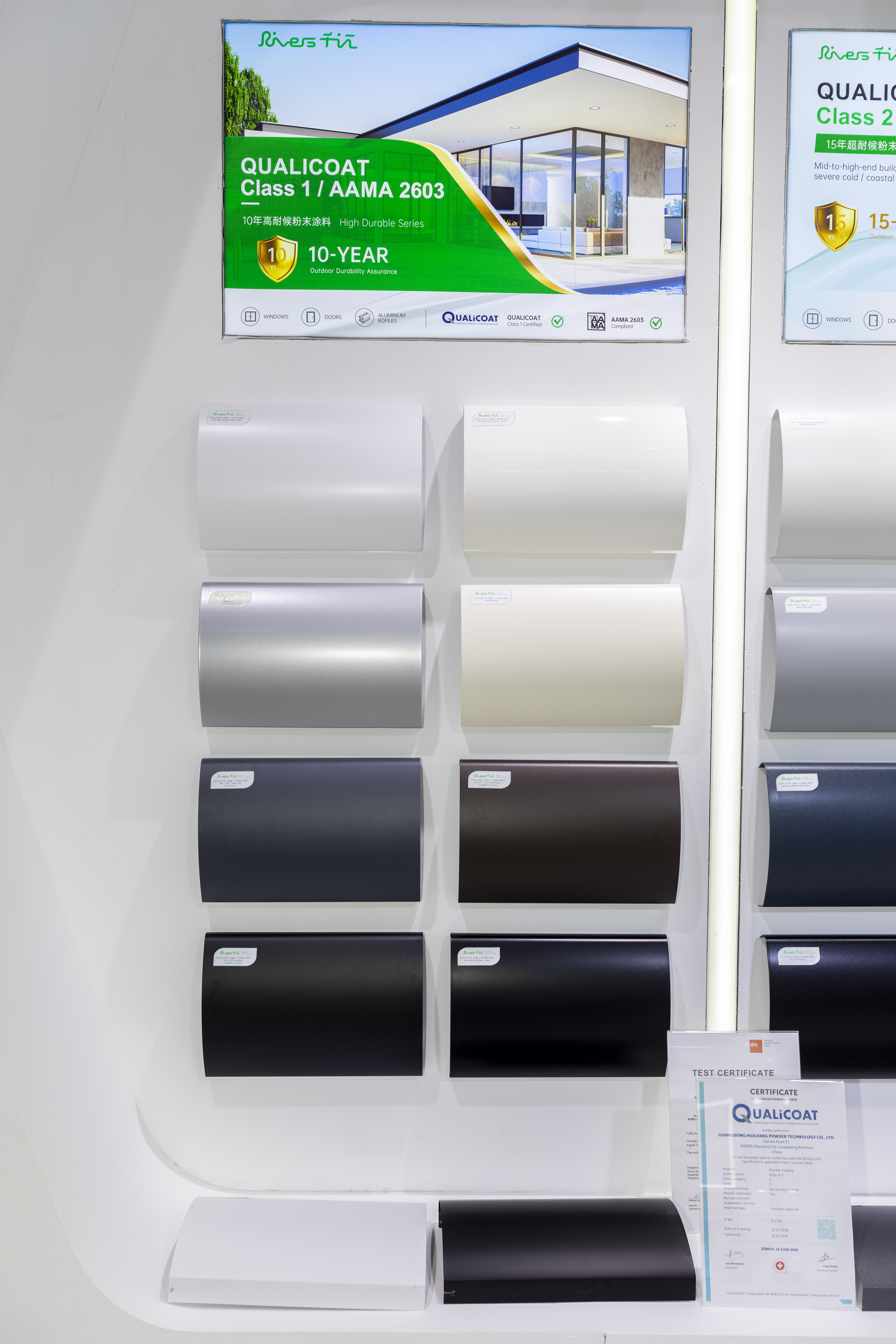
One Rivers C5-M-oriented system, for example, uses an EX-P primer at approximately 100 μm combined with an NJ exterior topcoat of at least 60 μm, together with appropriate substrate preparation.
The important point is not to copy these film thicknesses into every project automatically.
The coating build must be selected according to the actual specification, environment, substrate and required validation.
But the example demonstrates why demanding corrosion protection is usually discussed in terms of a system build, rather than one coat and one generic film thickness.
When Does a Zinc-Rich Primer Make Sense?
For some steel protection applications, a zinc-containing primer may be considered.
Rivers' portfolio includes the EX-ZD zinc-rich epoxy primer for relevant anti-corrosion systems.
Zinc-rich technology can provide an additional protection mechanism for steel, but it should not be treated as an automatic upgrade for every project.
The correct primer depends on the environment, coating structure, customer specification, application process and cost target.
This is an important principle in industrial coatings:
more expensive does not automatically mean more appropriate.
A properly designed pure epoxy system may be suitable for one application, while another specification may justify zinc-rich technology.
The supplier's role is to understand the project before selecting the primer.
Why the Topcoat Still Matters
An excellent epoxy primer is not designed to solve every requirement on its own.
For exterior equipment, the topcoat also needs to manage sunlight, color retention and surface appearance.
This is why Rivers can combine anti-corrosion primers with exterior polyester systems such as NJ high-durability topcoats, depending on the project.
The topcoat can also provide the required visual finish—smooth, textured, matt or another approved surface.
For manufacturers, separating the functions of primer and topcoat creates greater design flexibility:
Primer: adhesion + corrosion protection
Topcoat: weatherability + color + appearance
Instead of forcing one powder to perform every function, the coating structure allows each layer to do the job for which it is better suited.
Salt-Spray Hours Need Context
“Can your powder pass 1,000 hours?”
“What about 2,000 hours?”
These are common questions in anti-corrosion projects.
Salt-spray testing can be useful for comparing and qualifying coating systems, but the number of hours should never be interpreted without test conditions.
A meaningful report should identify factors such as substrate, surface preparation, coating structure, total film thickness, scribe conditions where applicable and evaluation criteria.
A two-layer system on properly blasted steel cannot be directly compared with a single layer applied to a differently prepared substrate simply because both reports mention the same number of hours.
For this reason, Rivers recommends evaluating the complete test configuration, not only the headline duration.
The same principle applies to humidity and other corrosion-related tests.
Where Are C4/C5 Powder Systems Used?
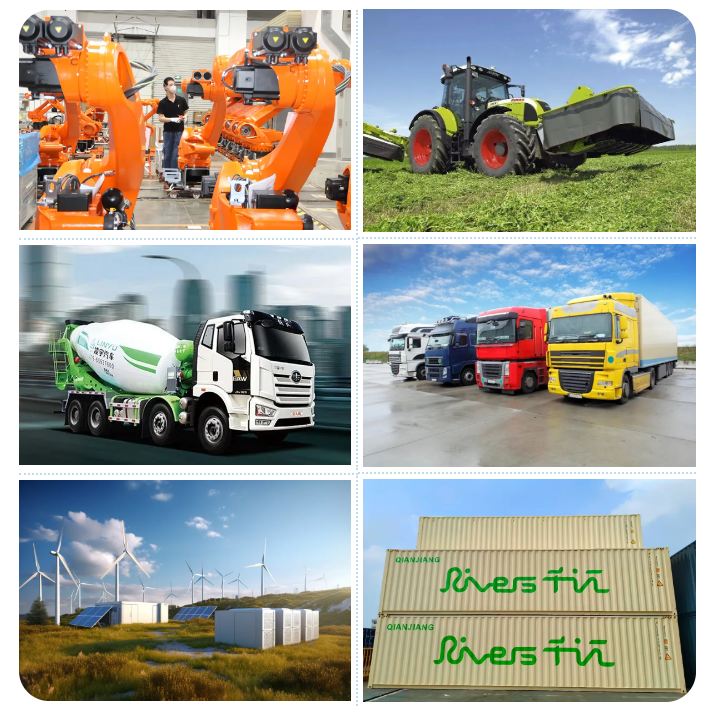
Demanding anti-corrosion powder coating systems can be relevant to many industrial products, including:
transformers and electrical enclosures;
energy-storage cabinets and containers;
container and transportation components;
outdoor machinery;
steel structures and fabricated components;
coastal industrial equipment;
agricultural and infrastructure equipment.
Rivers has application experience across power equipment, transformers, energy-related products and container manufacturing, providing a useful technical foundation for these projects.
Different industries still require different coating designs. A transformer enclosure, for example, should not automatically use exactly the same coating specification as a coastal structural component.
The environment and customer standard remain the starting point.
The Rivers Approach to Anti-Corrosion Projects
For demanding corrosion-protection applications, Rivers' relevant strength is not simply manufacturing scale.
It is the ability to combine several coating technologies into a project-specific structure.
The portfolio includes EX-D pure epoxy primer, EX-ZD zinc-rich epoxy primer, other primer options and durable polyester topcoats, supported by experience with ISO 12944 C3/C4/C5-M/C5-H-oriented systems.
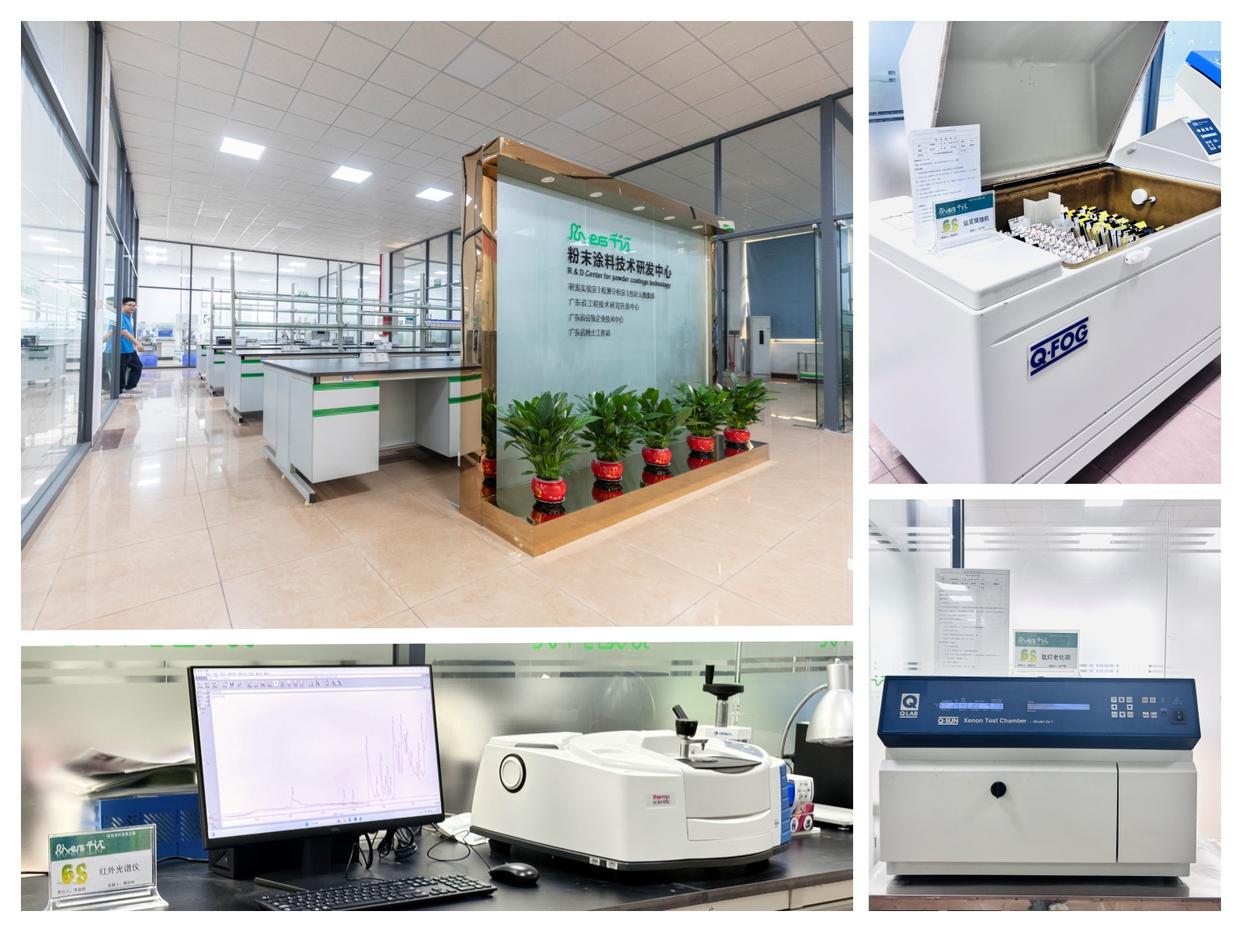
For overseas projects, Rivers can also provide English TDS/SDS and available product-specific test documentation, while technical teams can discuss substrate preparation, target film build, curing and coating sequence before commercial supply.
This reduces a common supplier-switching risk: approving a powder based on a laboratory result without confirming whether the customer's actual process can reproduce the tested system.

From Corrosion Category to a Real Coating Specification
A more professional anti-corrosion inquiry should therefore provide:
Application → Service Environment → Substrate → Surface Preparation → Required Standard → Primer → Topcoat → Film Thickness → Curing Conditions → Required Tests
Only after these parameters are understood does price comparison become meaningful.
The lowest-priced kilogram of powder is not necessarily the lowest-cost corrosion-protection system.
Premature corrosion can lead to rework, warranty claims, equipment downtime and replacement costs far beyond the initial coating price.
For demanding industrial environments, the better objective is not simply:
“How many hours can this powder pass?”
It is:
“Can this complete coating system provide the required protection on my actual product and production line?”
That is the question Rivers aims to answer when developing anti-corrosion powder coating solutions.
Call to Action
Working on a C4 or C5 corrosion-protection project? Send Rivers your substrate, service environment, surface preparation, required standard, target film thickness and test requirements. We can help evaluate the primer/topcoat structure and provide samples, English TDS/SDS, available test documentation and technical support before production qualification.

Rivers (Qianjiang) Group
Zhaoqing Qianjiang High-Tech Materials Technology Corporation
Guangdong Huajiang Powder Technology Co., Ltd.
Shandong Qianjiang Powder Technology Co., Ltd.
Guangdong Wesdon Rivers Powder Paints Scientifc Research Co., Ltd.
Zhaoqing Qianjiang Coating Co., Ltd.
Zhuhai Zhengdong Chemicals Co., Ltd.
Zhongshan Yonghan Industrial Additives Co., Ltd.
Guangdong Honglang Technology Co., Ltd.
WhatsApp:+86 150 1171 7323
Mail:global@riversqj.com
Address:
Guangdong Huajiang Powder Technology Co., Ltd.
No. 27 Jianshe Road, Dawang High tech Zone, Zhaoqing, Guangdong Province


