
Powder Coating for Alloy Wheels: Building a Reliable Multi-Layer Finish from Basecoat to Clear Coat
Alloy Wheel Coating Is a System, Not a Single Powder
An alloy wheel is one of the most visually demanding coated components on a vehicle.
Customers immediately notice color depth, gloss, metallic appearance and surface defects. At the same time, wheels operate close to the road, where the coating must tolerate moisture, temperature changes, cleaning chemicals and mechanical exposure.
This combination makes wheel coating more complicated than simply selecting a black or silver powder.
A typical premium finish may involve several coordinated layers:
Pretreated Aluminium → Base Powder → Metallic / Color Layer → Clear Coat
Each layer has a different purpose, and the final appearance depends on how the complete system works together.
Rivers Powder Coatings has developed wheel-coating products including high-gloss black and white base powders, weather-resistant versions, metallic finishes and acrylic powder clear coats, supporting both appearance-driven and performance-driven wheel applications.
Why the Basecoat Matters More Than Many Buyers Expect
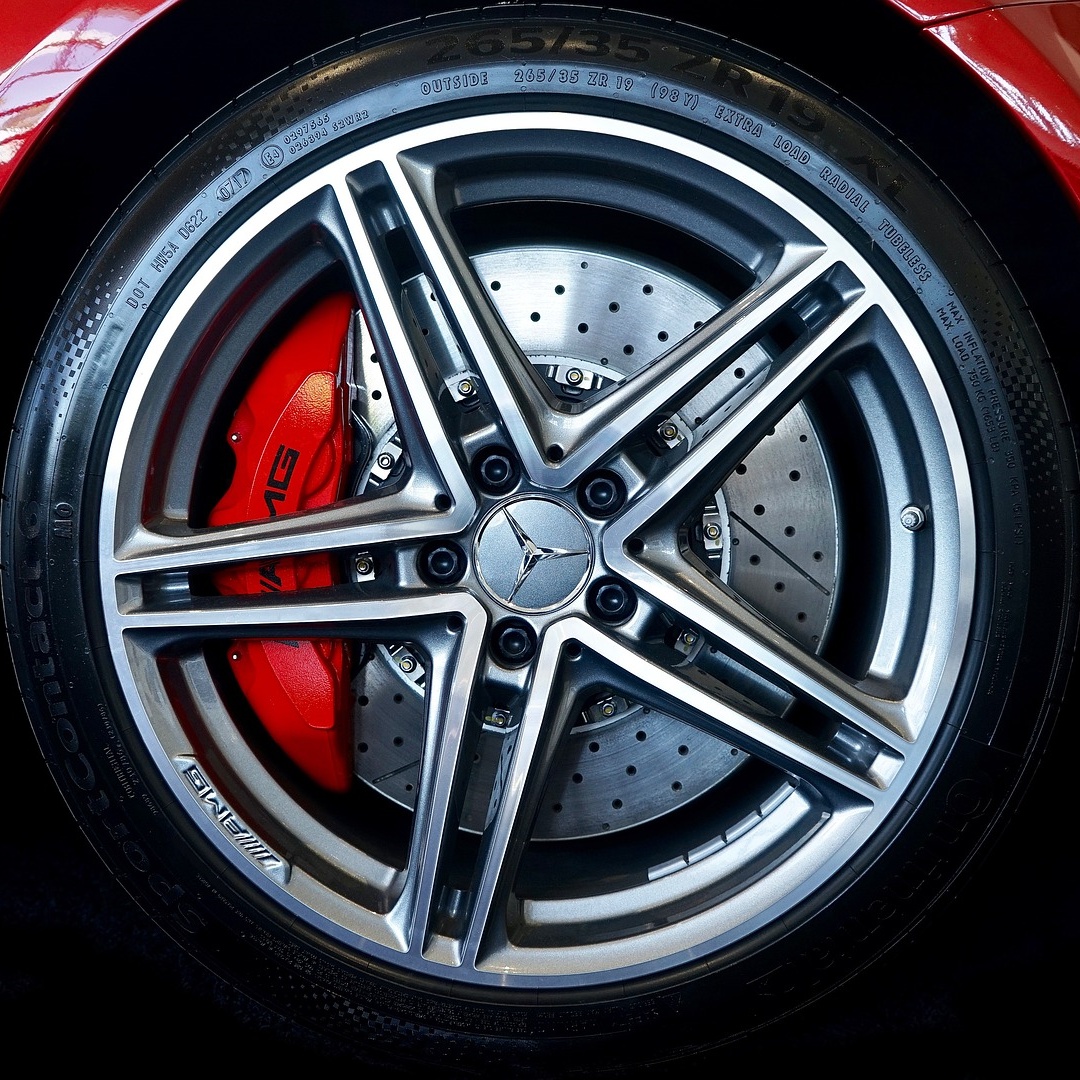
For a high-gloss wheel, the final surface begins with the base layer.
If the base powder has poor flow, surface defects or inconsistent gloss, the subsequent clear coat cannot completely hide those problems.
Rivers' wheel portfolio includes high-gloss black and white base powders developed for smooth appearance and industrial application.
For selected wheel products, Rivers targets gloss levels of approximately 95–97 GU or higher, depending on the product and agreed test conditions.
A deep black base can also influence the visual depth of the finished wheel, especially when combined with a transparent top layer.
For wheel manufacturers, this means the base powder should be evaluated not only for color but also for leveling, edge coverage, curing behavior and compatibility with subsequent coating layers.

Standard and UV-Resistant Base Powders Serve Different Needs
Not every wheel coating line requires exactly the same system.
Rivers can provide both general-purpose and UV-resistant wheel base powders, allowing manufacturers to select a product according to the final coating structure and durability requirement.
This distinction is useful because the clear coat and basecoat share responsibility differently depending on the system.
A manufacturer should therefore avoid selecting each powder independently.
The better approach is to evaluate the complete coating stack, including pretreatment, basecoat, effect layer if used, clear coat and curing sequence.
This helps prevent compatibility problems that may only become visible after multiple layers have been applied.
Acrylic Clear Powder Creates the Final Visual Depth
The clear coat is especially important on premium alloy wheels.
Rivers provides acrylic transparent powder coating for wheel applications, where the clear layer can enhance gloss and visual depth while protecting the underlying finish.
Unlike a pigmented topcoat, clear powder makes defects beneath it more visible.
Contamination, uneven basecoat, poor metallic distribution or surface imperfections can remain visible through the transparent layer.
Production cleanliness and intercoat compatibility therefore become particularly important.
For manufacturers converting or expanding from liquid clear coats to powder technologies, the entire application and curing process should be validated rather than evaluating the clear powder in isolation.
Metallic Wheels Add Another Level of Complexity
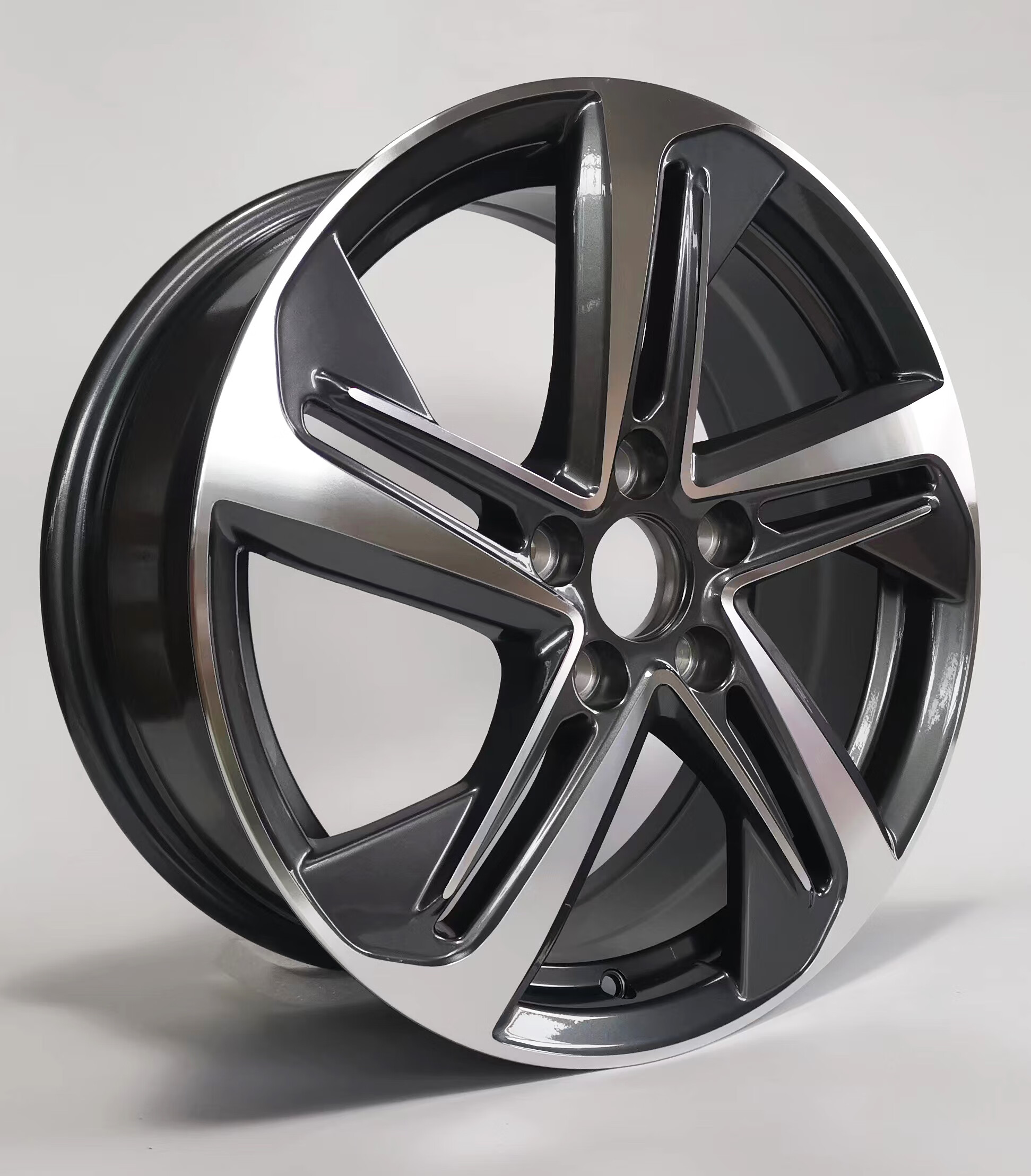
Silver and other metallic finishes remain important in the wheel market.
Metallic powder appearance can be influenced by electrostatic settings, component geometry, film thickness and pigment orientation.
Wheel geometry makes this particularly challenging.
Spokes, recessed areas and exposed faces do not receive powder in exactly the same way.
A metallic powder that looks excellent on a flat laboratory panel may therefore appear different on an actual wheel.
Rivers operates 30+ large-scale metallic bonding lines, giving the company dedicated manufacturing capability for bonded metallic powder coatings.
For wheel manufacturers, this supports greater effect stability and provides a stronger foundation for repeat production.
However, Rivers still recommends actual-wheel trials before final approval because the customer's guns, grounding, reclaim system and wheel geometry remain important variables.
Production Consistency Is the Real Qualification
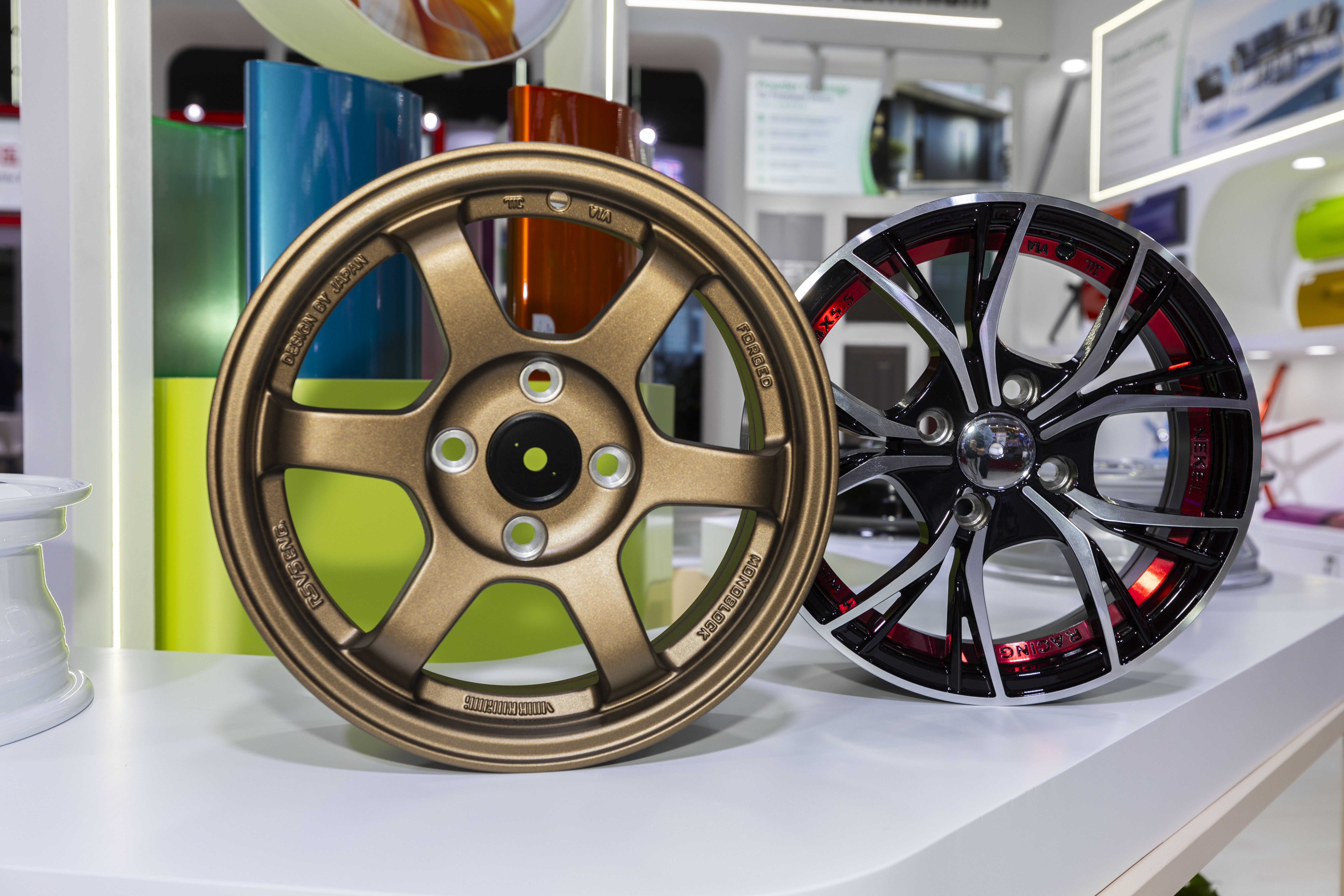
A successful sample wheel is only the beginning.
Automotive-related manufacturing requires the same appearance to be reproduced across repeated production batches.
This is why Rivers places emphasis on the transition from laboratory development to production-line validation.
Its wheel-coating products have been involved in BYD-related OTS validation, with relevant SGS testing available for selected systems. Rivers has also developed wheel projects for overseas markets including Australia, Russia, Canada and Türkiye.
These experiences are useful because export wheel manufacturers may have different coating structures, application equipment and customer specifications.
Rather than treating one formulation as universal, Rivers can adjust product selection according to the customer's existing line and target finish.
Quality Control Must Follow the Complete Coating Process
When a wheel fails appearance or performance testing, the powder itself is only one possible cause.
Pretreatment, grounding, film thickness, oven profile, contamination and the interaction between coating layers can all affect the result.
For example, a powder may technically meet its curing requirement while the actual wheel—because of its aluminium mass—has not reached the required metal temperature for long enough.
Similarly, excessive film thickness in one layer may influence flow or appearance in the next.
For this reason, wheel coating qualification should monitor the entire process:
Pretreatment → Basecoat → Cure → Effect Layer → Cure → Clear Coat → Final Cure → Inspection
The precise sequence depends on the customer's system, but the principle remains the same: each layer influences the next.
What Rivers Brings to Wheel-Coating Projects
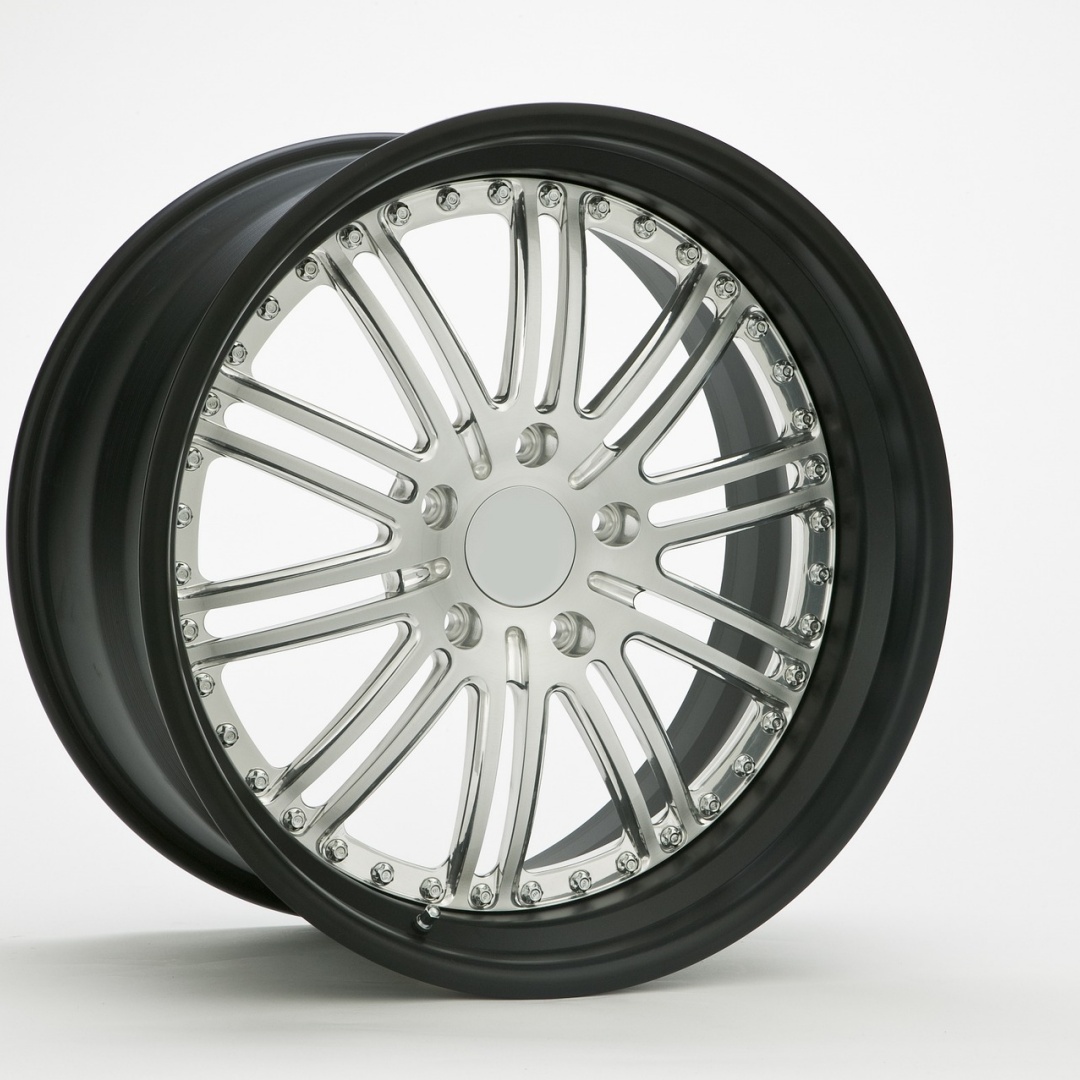
For wheel manufacturers, Rivers combines several capabilities within one supply platform.
The company can support high-gloss base powders, UV-resistant versions, bonded metallic colors and acrylic clear powder, reducing the need to coordinate unrelated suppliers for different coating layers.
Behind this product range is Rivers' broader manufacturing platform, including dedicated metallic bonding capacity and experience moving customized samples into recurring industrial production.
For overseas customers, Rivers can also provide English TDS/SDS, available SGS or other test documentation, customized samples and technical communication during qualification.
The customer benefit is not simply having more powder options.
It is having a supplier that can evaluate how those products work together as a complete wheel-coating system.
From Reference Wheel to Mass Production
A practical wheel project can follow a structured development route:
Reference Wheel / Target Finish → Coating-System Analysis → Color & Gloss Matching → Laboratory Samples → Actual-Wheel Spraying → Customer Testing → Production Validation → Bulk Supply
This is particularly valuable when replacing an existing supplier.
Instead of approving only a color panel, manufacturers can compare the complete coated wheel under their own production and test conditions before switching commercial supply.
For Rivers, the goal is straightforward:
make the finish attractive enough for the showroom and stable enough for the production line.
Call to Action
Developing a new alloy wheel finish or evaluating an alternative powder coating supplier? Send Rivers your reference wheel, coated sample or coating-system requirements. We can support high-gloss basecoat matching, metallic development, acrylic clear powder, samples, TDS/SDS, available test documentation, quotations and technical evaluation.

Rivers (Qianjiang) Group
Zhaoqing Qianjiang High-Tech Materials Technology Corporation
Guangdong Huajiang Powder Technology Co., Ltd.
Shandong Qianjiang Powder Technology Co., Ltd.
Guangdong Wesdon Rivers Powder Paints Scientifc Research Co., Ltd.
Zhaoqing Qianjiang Coating Co., Ltd.
Zhuhai Zhengdong Chemicals Co., Ltd.
Zhongshan Yonghan Industrial Additives Co., Ltd.
Guangdong Honglang Technology Co., Ltd.
WhatsApp:+86 150 1171 7323
Mail:global@riversqj.com
Address:
Guangdong Huajiang Powder Technology Co., Ltd.
No. 27 Jianshe Road, Dawang High tech Zone, Zhaoqing, Guangdong Province


