
Bonded Metallic Powder Coatings: How to Achieve More Consistent Premium Finishes in Mass Production
Metallic Powder Coating Is an Effect, Not Just a Color
Metallic finishes can transform an ordinary metal component into a premium-looking product. Champagne gold aluminium profiles, metallic-grey furniture, silver automotive parts and bronze architectural components can all gain significantly more visual depth from metallic powder coating.
However, producing an attractive laboratory sample is relatively easy. Reproducing that appearance across thousands of square meters or thousands of components is much more difficult.
Unlike conventional solid-color powders, metallic formulations contain effect pigments whose distribution and orientation influence the final appearance. Changes in electrostatic conditions, film thickness, workpiece geometry and powder recovery can produce visible differences.
For B2B manufacturers, the real question is therefore not simply:
“Can you make this metallic color?”
It is:
“Can you reproduce it consistently in mass production?”
This is where bonding technology becomes particularly important.

Dry-Blended vs. Bonded Metallic Powder
Metallic powder coatings can be manufactured using different processes.
In a simple dry-blended system, effect pigments are physically mixed with the base powder after grinding. This approach can be suitable for certain finishes, but the metallic particles and powder particles remain relatively independent.
Because their particle size, density and electrostatic behavior may differ, separation can occur during transportation, fluidization, spraying or powder recovery.
That separation may gradually change the appearance during production.
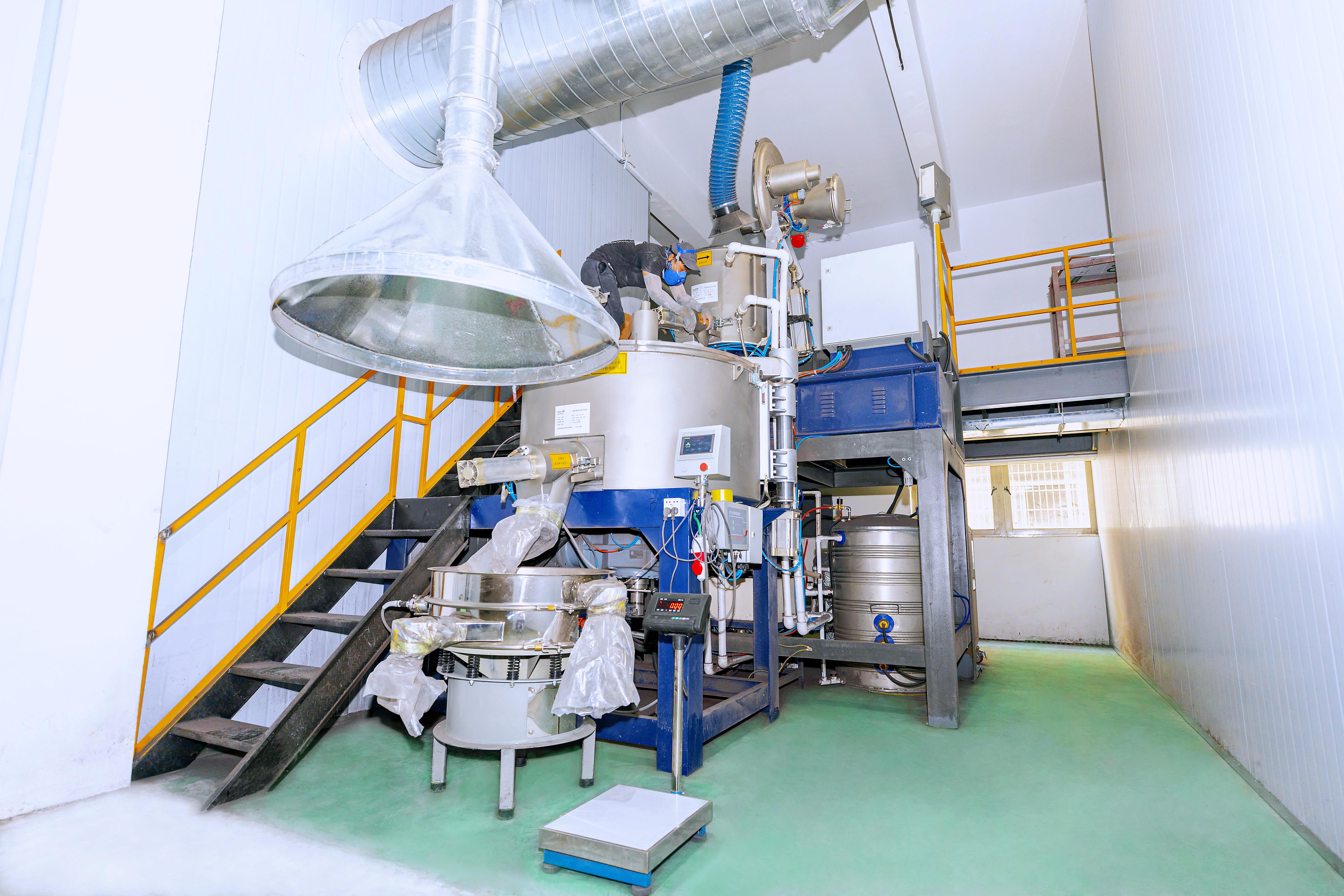
Bonding uses a controlled process to associate metallic or effect pigments more closely with the powder particles. When properly formulated and processed, this helps create a more homogeneous powder system.
The practical benefits can include improved application stability, more consistent metallic distribution and better repeatability when reclaim powder is involved.
Bonding does not eliminate every metallic application variable, but it provides a stronger foundation for industrial-scale consistency.
Why Application Parameters Still Matter
Even a well-bonded metallic powder cannot compensate for an uncontrolled coating line.
Electrostatic voltage can influence pigment orientation. Spraying distance and gun position affect deposition. Film-thickness variation can change both color depth and metallic appearance.
Component geometry introduces another variable.
A flat sample panel receives powder very differently from a deep aluminium extrusion, multi-spoke wheel or welded furniture frame. Recessed areas can experience Faraday-cage effects, while exposed surfaces may accumulate powder more easily.
For this reason, Rivers evaluates metallic projects from both the formulation side and the application side.
The approved laboratory panel establishes the visual target, but application simulation helps determine whether the finish can be reproduced under practical production conditions.
Metallic Powder Is a Core Manufacturing Capability at Rivers
Metallic finishes are not treated as a small specialty category within Rivers’ portfolio.
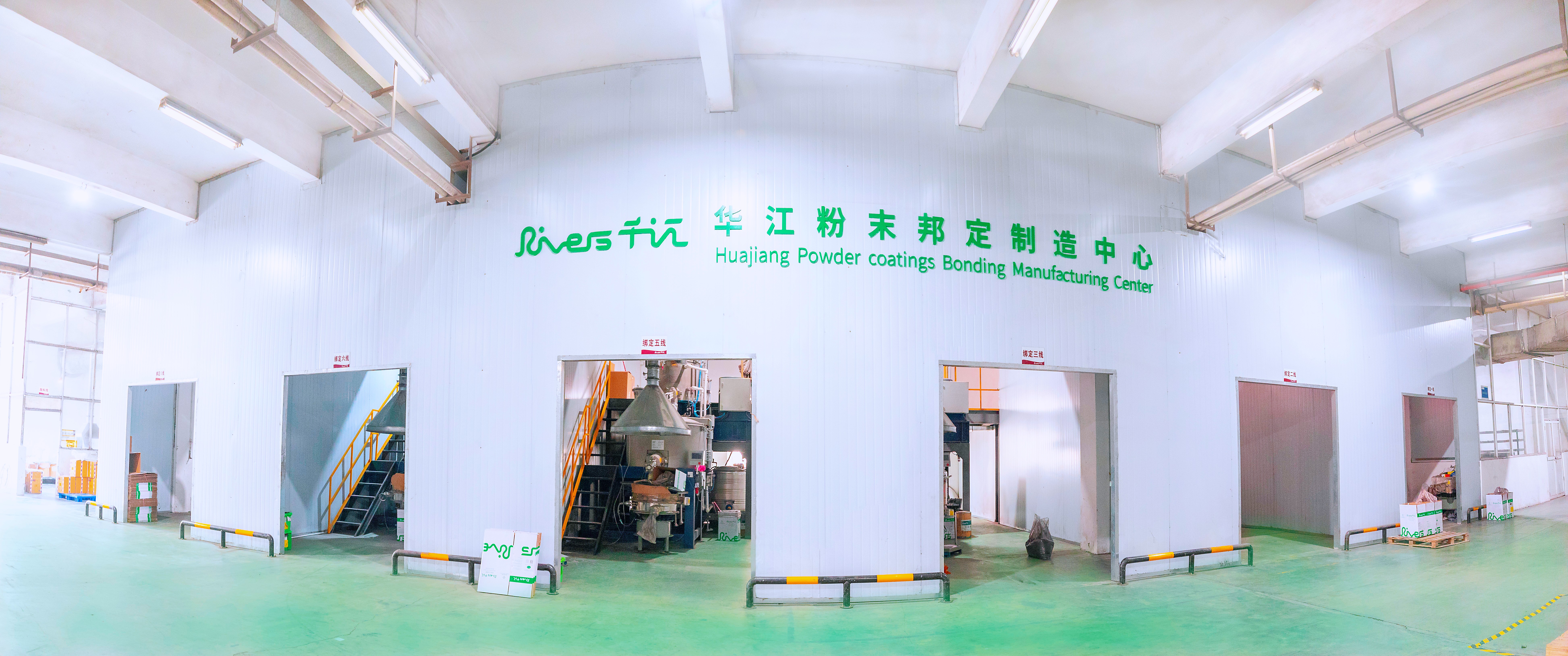
Rivers currently operates more than 30 large-scale bonding lines, supporting approximately 1,000 tons of metallic powder coating output per month. With ongoing manufacturing expansion, the company plans to increase bonding capacity to more than 60 lines.
This capacity supports both standardized metallic products and customized finishes developed from customer samples.
The broader Rivers manufacturing network includes more than 100 extrusion and grinding lines, 53 sample-development lines and annual powder coating capacity exceeding 100,000 tons.
For international buyers, manufacturing scale matters because metallic powder projects frequently move through very different volume stages—from a few kilograms for color evaluation to trial production and eventually recurring commercial orders.
The supplier needs to manage that transition without losing the approved appearance.
From Champagne Gold to Chameleon Effects
Metallic powder coating is not limited to conventional silver.
Rivers develops a wide range of decorative effects for architectural and industrial applications, including champagne tones, bronze, metallic grey, fine silver, metallic black and other customized finishes.
More distinctive products can combine metallic effects with matt, fine-texture or ultra-matt surfaces.
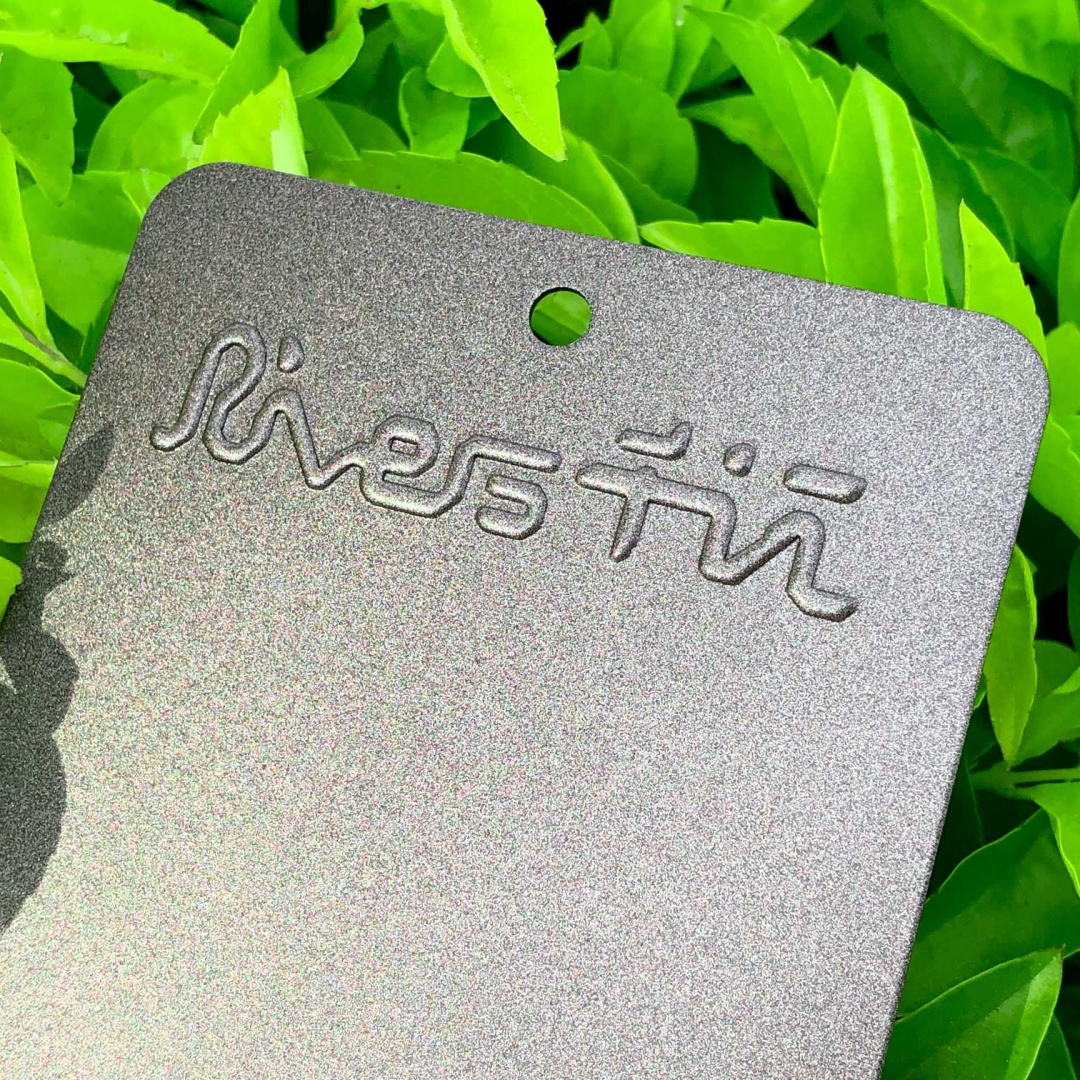
Rivers has also developed chameleon-style color-shifting metallic finishes, where the perceived color changes according to viewing angle and lighting.
These products can create strong differentiation for furniture, decorative hardware, bicycles, automotive components and other consumer-facing products.
For architectural aluminium, metallic finishes can also be combined with higher-weatherability polyester technologies when the project requires both decorative appearance and long-term exterior performance.

Different Industries Create Different Metallic Challenges
A metallic powder should always be developed around its final application.
For architectural aluminium profiles, batch consistency is particularly important because adjacent profiles can make small color differences visible across a façade.
For furniture, designers may prioritize decorative depth, texture and cost efficiency while manufacturers require good transfer efficiency on tubular frames.
For automotive wheels, metallic appearance must remain stable across complex spoke geometry and may form one layer within a multi-coat system.
For lighting and decorative hardware, fine metallic effects can be used to create premium surfaces on relatively small components where appearance is the main purchasing criterion.
Rivers therefore does not recommend treating one metallic formulation as a universal product across all these industries.
Reclaim Powder Requires Special Attention
Powder coating is valued partly because overspray can often be recovered and reused.
Metallic products make reclaim management more complicated.
If effect pigments and base powder behave differently during spraying, the composition of recovered powder may gradually differ from virgin material. As the reclaim ratio changes, appearance may also shift.
Bonding can improve stability, but manufacturers should still establish a controlled virgin-to-reclaim ratio and monitor the finish during production.
For highly appearance-sensitive projects, Rivers can work with customers to evaluate suitable application and reclaim practices during qualification.
This is another reason why metallic powder should be tested on the actual production line rather than approved exclusively from a laboratory panel.
From Customer Sample to Commercial Production
A typical Rivers metallic development project can follow a structured process:
Reference Sample → Color & Effect Analysis → Laboratory Formulation → Bonding → Sample Spraying → Customer Approval → Production-Line Trial → Bulk Production
For overseas customers, small samples can be prepared before commercial quantities are ordered.
Once the finish is technically approved, Rivers can provide English TDS/SDS, application recommendations and technical support to help transfer the laboratory result to the customer's coating line.
The objective is straightforward:
not merely to create an impressive metallic sample, but to create a metallic powder that manufacturers can repeatedly produce with confidence.
Call to Action
Developing a new metallic finish or looking for a more stable alternative for an existing product? Send Rivers your coated panel, powder sample, color reference or target effect. We can support customized metallic color matching, bonding, samples, TDS/SDS, quotations, application evaluation and production-line technical support.

Rivers (Qianjiang) Group
Zhaoqing Qianjiang High-Tech Materials Technology Corporation
Guangdong Huajiang Powder Technology Co., Ltd.
Shandong Qianjiang Powder Technology Co., Ltd.
Guangdong Wesdon Rivers Powder Paints Scientifc Research Co., Ltd.
Zhaoqing Qianjiang Coating Co., Ltd.
Zhuhai Zhengdong Chemicals Co., Ltd.
Zhongshan Yonghan Industrial Additives Co., Ltd.
Guangdong Honglang Technology Co., Ltd.
WhatsApp:+86 150 1171 7323
Mail:global@riversqj.com
Address:
Guangdong Huajiang Powder Technology Co., Ltd.
No. 27 Jianshe Road, Dawang High tech Zone, Zhaoqing, Guangdong Province


